Guides · concern
Bi-Fold Performance Ratings (CW-PG55)
The performance credibility to spec bi-folds on demanding projects — CW-PG55, wind load to 5,000 Pa, water tightness to 600 Pa, air tightness, hurricane pin option.
Updated July 17, 2026
Why Performance Ratings Matter on Bi-Fold
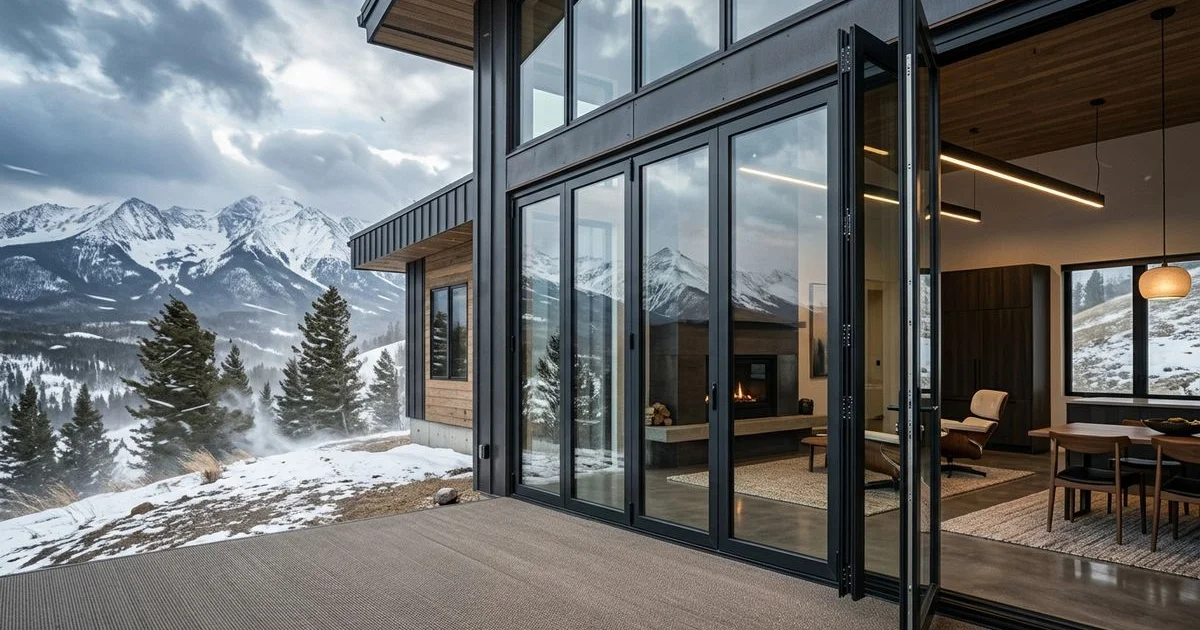
A bi-fold door has more joints per foot of opening than any other moving-glass system — a consequence of how bi-fold door systems work, where panels fold and stack rather than slide on a single track. Every panel-to-panel intersection is a joint. Every hinge is a joint. The sill and head detail across multiple panels involves multiple joints. On a well-engineered system, every joint contributes to the whole-assembly performance; on a poorly-engineered system, every joint is a failure point.
The performance ratings on the Alta Vetro bi-fold system demonstrate that all those joints work together at commercial-grade performance levels. CW-PG55 is the credibility architects and general contractors need to specify bi-folds on demanding projects.
Here’s what the ratings actually mean.
CW-PG55: The Standard, Decoded
CW-PG55 is a US commercial performance standard defined by AAMA/WDMA/CSA 101/I.S.2/A440 — the North American standard for window, door, and skylight performance. The designation breaks down:
CW — Commercial Window. Meaning the product is rated for commercial application, not just residential. Commercial-window performance targets are more demanding than standard residential ratings.
PG55 — Performance Grade 55. This refers to the design pressure (DP) rating in pounds per square foot. PG55 means the assembly is rated for a 55 psf design pressure — which corresponds to approximately 2,632 Pa design pressure and 5,000 Pa test pressure.
The rating covers three test metrics:
- Wind-load resistance — the pressure the closed assembly resists without exceeding maximum permitted deflection or losing structural integrity
- Water-penetration resistance — the pressure at which water penetration past the seal line is measured
- Air-tightness — the volume of air infiltration through the assembly at test pressure
For architects and GCs, the CW-PG55 rating on the specification package translates to commercial-grade credibility for demanding applications.
Wind Load: 5,000 Pa Test Pressure
The 5,000 Pa test pressure corresponds to sustained wind speeds around 195 mph. That’s well above the design wind speeds specified for essentially any Colorado site under ASCE 7 — and above the design wind speeds for most sites in the continental US outside of high-hurricane-exposure coastal zones.
Practically, the rating means the closed bi-fold resists design wind loads with significant margin at any site the architect is likely to specify. In Colorado mountain applications with high-wind exposure (open-terrain sites, ridge-top installations, box-canyon Telluride locations), the CW-PG55 rating gives the specification comfortable performance margin.
Water Tightness: 600 Pa
Water tightness to 600 Pa means the closed assembly resists water penetration up to 600 Pa of driven-water pressure. For context, wind-driven rain at 60 mph corresponds to approximately 600 Pa driven-water pressure. The rating means the closed bi-fold handles driven rain at hurricane-driving-force levels without water penetrating past the seal line.
This is achieved through:
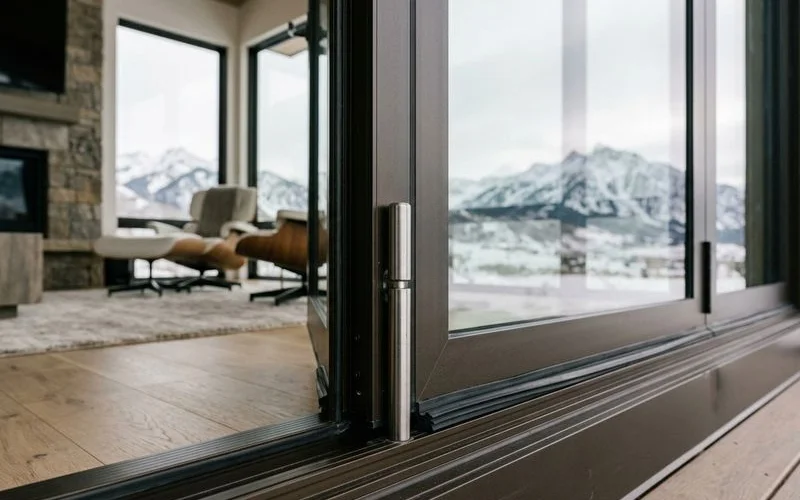
- Full-perimeter compression seals engineered to the CW-PG55 specification
- Anti-pinch double-layer gaskets at panel intersections, which contribute to the sealing
- Factory-fitted threshold drainage that catches any incidental water at the sill and routes it out
For Colorado applications with wind-driven snow or heavy driven rain, the 600 Pa rating gives specification confidence.
Air Tightness: 0.3 cfm/ft²
Air infiltration under 0.3 cubic feet per minute per square foot at test pressure. On a 24-foot by 10-foot bi-fold (240 square feet), that’s a maximum of 72 cfm air infiltration at test pressure — which is dramatically better than standard commodity residential doors and consistent with commercial-grade whole-wall performance targets.
The practical benefit is a quieter interior, lower heating and cooling loads, and better whole-house pressurization control on the passive-house-aligned specifications the mountain markets are increasingly asking for.
Impact-Rated Hurricane Pin System (Optional)
For exposed applications where wind-driven debris is a design concern — or for projects that need to meet Florida Building Code hurricane requirements — the impact-rated hurricane pin system is an option. When engaged, the pin system reinforces the closed configuration at critical points to resist impact loading without failure.
On Colorado applications, the hurricane pin is rarely specified — the wind-driven debris risk isn’t at hurricane-zone levels. It’s included in the product line for architects specifying to coastal building codes or other high-impact requirements.
Coordination With the Specification Package
The CW-PG55 rating documentation is part of the specification resource pack for architects specifying an Alta Vetro bi-fold. The documentation includes:
- Test report references citing the specific test to CW-PG55 criteria
- NFRC performance values (U-factor, SHGC, VT, air leakage) for the specified configuration
- CPD numbers for compliance calculations
- Manufacturer performance certification in specification-friendly format
For a project on a demanding site — high-wind, high-exposure, or code requiring commercial-grade performance ratings — the CW-PG55 credibility is what makes the bi-fold specification hold up under scrutiny.
What This Means Delivered
For an architect specifying an Alta Vetro bi-fold system, the CW-PG55 rating means the specification carries the performance documentation to satisfy the demands of the project’s code, engineering review, and long-term performance expectations. Every project is different, but the performance envelope is broad enough to cover essentially any Colorado application at commercial-grade credibility.
FAQ
Related Questions
What is CW-PG55?
CW-PG55 is a US commercial performance standard for windows, doors, and skylights specified by AAMA/WDMA/CSA 101/I.S.2/A440. The CW designation means Commercial Window, and PG55 refers to Performance Grade 55 — meaning the assembly meets defined wind-load, water-penetration-resistance, and air-tightness targets at that grade level.
How much wind and water can they take?
Wind-load resistance to 5,000 Pa (approximately 195 mph sustained wind pressure) and water tightness to 600 Pa. Air infiltration is held to 0.3 cfm per square foot or less at test pressure.
Is an impact rating available?
Yes. An impact-rated hurricane pin system option is available for exposed applications where impact loading (wind-driven debris, hurricane conditions) is a design consideration. It's specified when the site conditions call for it.
Continue Reading
Related Guides
comparison
Bi-Fold Folding Walls vs. Sliding Systems for Your Opening
Weigh bi-fold against sliding for your opening — full-open clearance vs minimal sightlines, stacking, thermal and cost differences, and ideal openings.
scenario
Floor-Track Options: ADA-Compliant, Barrier-Free, and Flat Tracks
Four bi-fold track options — ADA-compliant low-profile and barrier-free flat tracks with drainage integration, and when to choose each.
definition
How Bi-Fold Door Systems Work (Thermal, Tracks, Screens)
Bi-fold mechanics explained — folding panel operation, top-hung and bottom-rolling systems, thermal insulation, and track and screen integration.
The Collection
Learn more about Folding / Bi-Fold Door Systems
Explore the full product line and request a design consultation to translate this reading into a specification for your project.