Guides · concern
Security and Multi-Point Locking on Luxury Aluminum Entry Doors
How multi-point locking, smart-lock integration, frame strength, and full-perimeter sealing secure high-value homes without sacrificing design.
Updated July 17, 2026
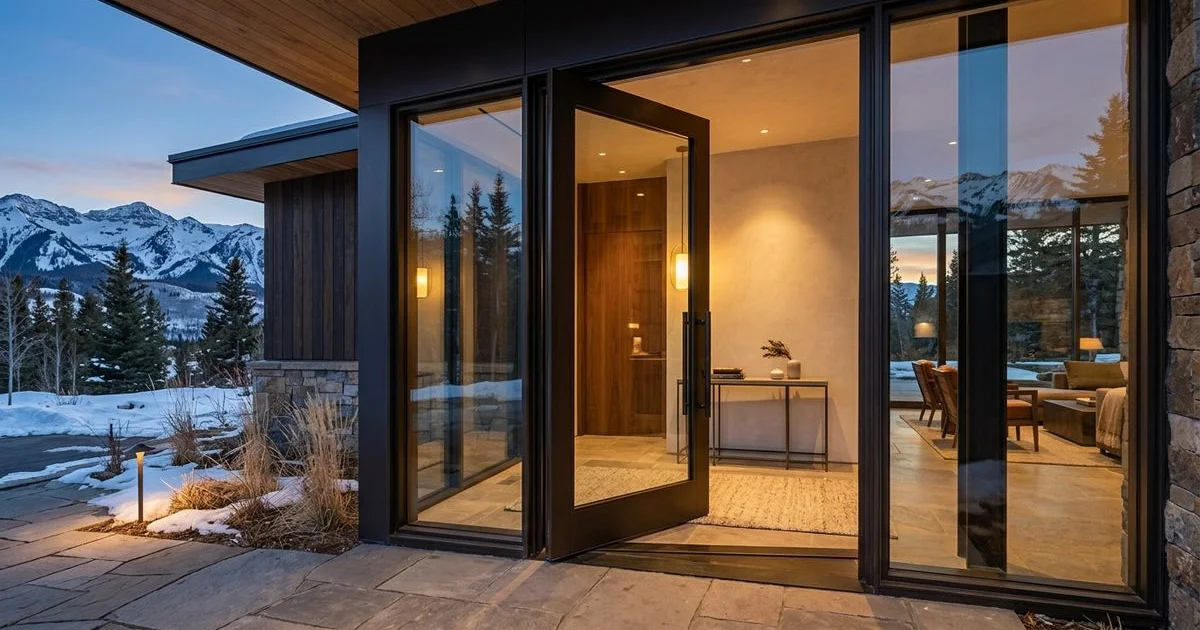
Security Without a Security Aesthetic
A high-value home has to be secure. It doesn’t have to look secure. A luxury entry door that reads as an armored fortress is a design failure — the security work belongs behind the finish, not on the front of the panel.
Alta Vetro premium entry doors are engineered so the security is comprehensive but concealed. Multi-point locking, smart-lock integration, frame strength, and full-perimeter sealing all contribute — and none of them announce themselves on the panel face.
Multi-Point Locking, Explained
A commodity front door has a single latch and a deadbolt. When it locks, one point on the panel perimeter is engaged. That single point is where a forced-entry attempt concentrates its force — and it’s why many commodity front-door failures happen at the single-point strike area.
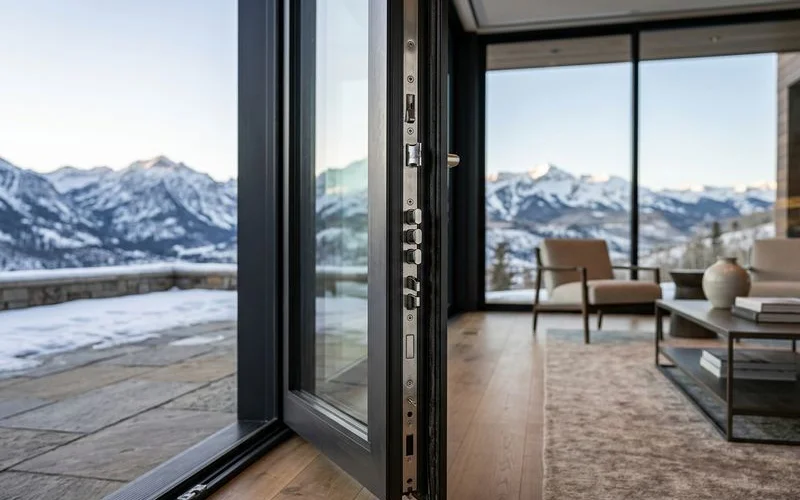
A multi-point locking system engages multiple bolts around the panel perimeter when the door closes. On Alta Vetro entries, a typical configuration engages three to five points — top, middle (deadbolt), and one or two lower positions. When you turn the interior handle up, all points engage simultaneously.
The security consequence is direct. Force applied at any single point on the panel is now resisted by the entire perimeter, not by a single latch. Prying attempts, kick-in attempts, and other single-point force applications are dramatically less effective. Multi-point locking is what makes a luxury entry actually harder to force than a commodity entry — not the finish or the material.
Multi-point locking is standard on every Alta Vetro premium entry.
Smart-Lock Integration
For clients who want keyless entry, biometric access, or integration with a home-security system, smart-lock integration is available. The smart-lock hardware engages the multi-point mechanism the same way the manual handle does — so the security benefit of multi-point locking is preserved with keyless access.
Compatible smart-lock brands vary; the specification confirms compatibility with the chosen platform. Common integrations include:
- Keypad entry with rotating access codes
- Biometric entry (fingerprint, occasionally face-recognition on high-end platforms)
- App-controlled entry via home-automation platforms
- Auto-lock on close — the multi-point mechanism engages automatically when the door reaches its closed position
The hardware options guide covers hinge and locking coordination alongside the smart-lock integration.
Frame Strength
Multi-point locking only performs if the frame it engages against is itself strong. On commodity doors, the frame can deform under force even if the locking mechanism holds — the door then swings from a deformed frame.
Alta Vetro entry-door frames use multi-cavity aluminum construction (see thermally broken entry door construction) with structural cavities that carry mechanical load into the wall assembly. The frame resists deformation under prying force. Multi-point locking then engages a frame that holds its geometry, so the whole security assembly performs as intended.
For extreme security-forward specifications, reinforced anchor plates at the multi-point strike locations are available. These distribute force from a locking-point attack into a wider frame area for additional resistance.
Full-Perimeter Sealing as Security
Sealing and security aren’t independent. On commodity doors, the seal-line gaps at the frame perimeter are also access points for prying tools — a screwdriver or crowbar can gain purchase at a poorly-sealed corner and lever the door open.
Full-perimeter sealing on Alta Vetro entries — a continuous elastomer compression seal around the whole door — eliminates those gaps. There is no visible perimeter opening for a tool to purchase. The door presents as a continuous plane against the frame from the exterior, which is a security benefit that commodity doors don’t have.
Security Without a Security Aesthetic
The finish, the panel style, and the hardware selection are all design decisions independent of the security specification. A minimalist matte-black panel with concealed hinges and a keypad smart-lock is as secure as a bronze-finish panel with exposed hinges and a mechanical lock. The security lives inside the panel and the frame, not in the design vocabulary.
That is why security-conscious homeowners don’t need to choose between a well-designed entrance and a well-secured one. The Alta Vetro spec delivers both by default — multi-point locking, smart-lock ready, full perimeter seal, multi-cavity frame — and the design vocabulary is chosen against the architecture, not against the security requirement.
FAQ
Related Questions
Do the doors have multi-point locking?
Yes. Multi-point locking is standard across the entry line. Multiple bolts engage around the panel perimeter when the door closes, distributing the locked force across the whole door rather than concentrating it at a single latch.
Can I add a smart lock?
Yes. Smart-lock integration works with the multi-point mechanism and supports keypad, biometric, or app-controlled entry. The specification confirms the integration for the chosen smart-lock brand.
Is the frame itself secure?
Yes. Frame strength on premium aluminum entries is high — the multi-cavity construction resists deformation and prying — and full-perimeter sealing paired with multi-point locking eliminates the gaps that commodity doors leave at the seal line.
Continue Reading
Related Guides
comparison
Aluminum vs. Wood vs. Steel Luxury Entry Doors
Compare thermally broken aluminum against wood and steel luxury doors — longevity, thermal performance, warping resistance, design flexibility, and cost.
process
Entry Door Finishes, Panel Styles, and Hardware Options
Walk the entry-door catalog — 40+ panel designs, 12 designer finishes plus custom colors, concealed vs exposed hinges, custom glass, and oversized options.
definition
Thermally Broken Entry Door Construction Explained
Inside thermally broken entry doors — 86mm–100mm panels, multi-cavity frames, full perimeter sealing, and the thermal-break benefits at the front door.
The Collection
Learn more about Premium Entry Doors
Explore the full product line and request a design consultation to translate this reading into a specification for your project.