Guides · comparison
Aluminum vs. Wood vs. Steel Luxury Entry Doors
Compare thermally broken aluminum against wood and steel luxury doors — longevity, thermal performance, warping resistance, design flexibility, and cost.
Updated July 17, 2026
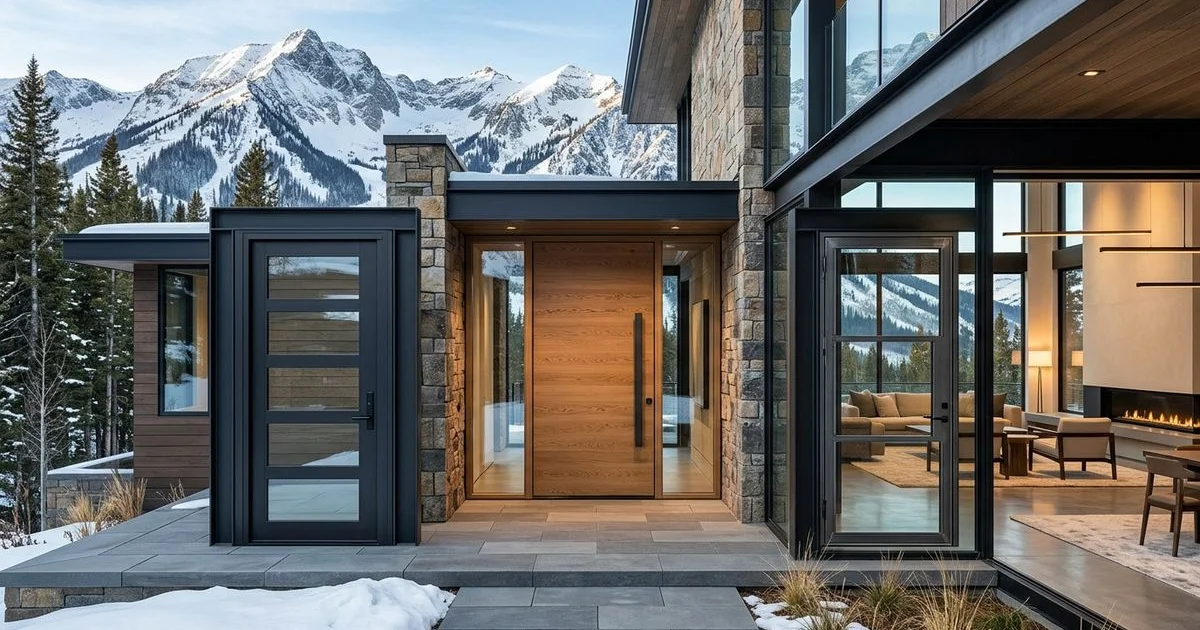
Three Materials, Three Trade-offs
Every luxury entry door is a material decision. Aluminum, wood, and steel each carry a distinct combination of longevity, thermal performance, design flexibility, and maintenance. There isn’t a universally correct answer — the right material depends on the architecture, the climate exposure, and the client’s expectations for how the door will age.
Alta Vetro supplies thermally broken aluminum entry doors because on a Colorado mountain build, the trade-offs consistently favor aluminum. Here is why, and where the other materials still have a case.
Longevity and Warping Resistance
Aluminum doesn’t warp. It doesn’t swell in humidity or shrink in dry cold. It doesn’t rot. In Colorado’s freeze-thaw cycling — the specific stressor that causes wood doors to move over years — aluminum holds its geometry indefinitely. A well-installed thermally broken aluminum door at year twenty reads the same as at year one.
Wood is beautiful and warm, but it moves. Even the best-engineered luxury wood doors expand, contract, and eventually drift with humidity and temperature cycling. In a Colorado mountain climate, that movement is amplified. Wood entrance doors need periodic re-alignment, refinishing every 5-10 years, and weatherstripping replacement more frequently than aluminum.
Steel doesn’t warp, but it rusts. Even galvanized and painted steel entry doors show corrosion at edges and mechanical points over time in a climate that cycles across freezing. Regular finish maintenance is necessary to keep steel from developing surface rust that eventually compromises the panel.
For Colorado’s climate, aluminum is the durability winner. Steel is close behind on rigidity but requires more maintenance. Wood is beautiful but needs the most ongoing care.
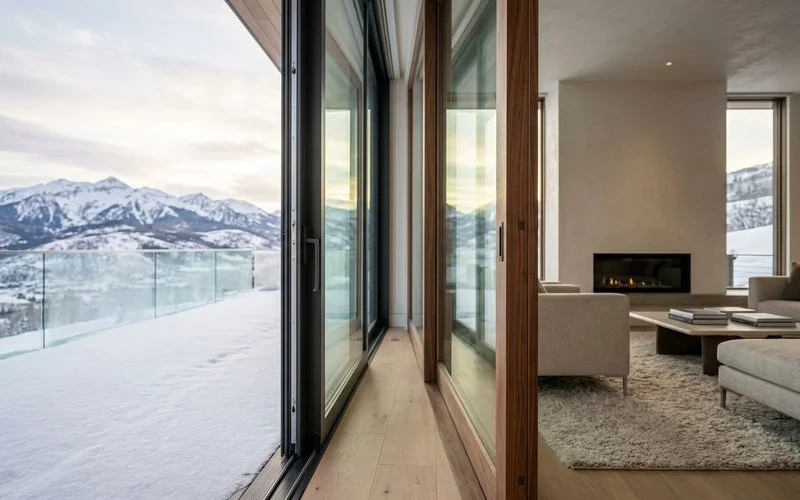
Thermal Performance
Aluminum without a thermal break is a poor thermal choice — the metal is highly conductive. But thermally broken aluminum (see the thermally broken aluminum guide) has an insulating polyamide strut inside the frame profile that stops thermal bridging. Whole-assembly U-factor performance on Alta Vetro’s thermally broken lines is comparable to or better than premium wood, and better than most steel.
Wood has inherent thermal resistance (R-value of about 1.4 per inch), which helps. But the sealing quality of a wood door — how tightly it holds its perimeter seal — determines actual whole-assembly performance more than material R-value does. Premium wood doors seal well when new; they seal less well as the door moves with humidity.
Steel is a poor thermal material even with foam-core construction. The metal skin conducts, and the foam fill compresses over time. Steel is rarely the right choice for a luxury Colorado entrance where thermal performance is a design concern.
Design Flexibility
Aluminum enables the thinnest frame sightlines of the three materials. The metal is strong enough to hold slim proportions without structural compromise. This is why minimalist modernist entries so often specify aluminum — the design language wants thin.
Aluminum’s finish, panel, and hardware options also run deep enough to carry a design-forward entry without reaching for another material.
Wood allows deep panel articulation, warm grain, and traditional or transitional design vocabularies that aluminum doesn’t reproduce. If the architecture is calling for a wood-forward material story, wood delivers something aluminum can approximate (with wood-grain finish textures) but not replace.
Steel allows heavy security-forward panel construction. On a security-driven specification, steel has a place. On a design-forward luxury entry, steel is rarely the aesthetic answer.
Cost Comparison
Cost varies by specification more than by material. A well-specified premium aluminum door and a well-specified premium wood door land in comparable ranges. Custom wood — reclaimed material, exotic species, hand-carved articulation — can carry higher costs. Custom aluminum — oversized panels, custom finishes, specialty glass — carries its own premium.
Steel is typically the lowest-cost of the three at commodity specifications and becomes competitive with aluminum at premium security-forward specifications.
What This Means for a Colorado Build
For a design-forward Colorado custom home with modernist or contemporary architecture, thermally broken aluminum is consistently the right material — durability, thermal performance, design flexibility all favor it, and cost is competitive with premium wood.
For traditional or transitional architecture where wood’s material warmth is part of the design intent, wood is the right answer with an accepted maintenance program.
For security-forward specifications where the entry needs to read as fortified, steel is worth considering — but the design consultation covers whether the aluminum line’s multi-point locking and full-perimeter sealing already handle the security intent without stepping into steel’s aesthetic constraints.
The design consultation walks through the material decision in the context of the specific project.
FAQ
Related Questions
Is aluminum better than wood for entry doors?
Aluminum resists warping and enables slimmer frame profiles; wood offers material warmth but needs more upkeep and is more sensitive to Colorado's freeze-thaw cycling. Neither is universally better — the right answer depends on the architectural vocabulary and maintenance expectations.
Does aluminum perform thermally?
Thermally broken aluminum performs well, comparable to a well-specified wood door and better than most steel doors, while keeping slim frame sightlines. The polyamide thermal break stops thermal bridging in the frame profile.
Which lasts longest?
Thermally broken aluminum is the most durable of the three in Colorado's mountain climate. It doesn't warp, doesn't rust, holds its finish under altitude UV, and needs minimal maintenance over the door's life.
Continue Reading
Related Guides
process
Entry Door Finishes, Panel Styles, and Hardware Options
Walk the entry-door catalog — 40+ panel designs, 12 designer finishes plus custom colors, concealed vs exposed hinges, custom glass, and oversized options.
concern
Security and Multi-Point Locking on Luxury Aluminum Entry Doors
How multi-point locking, smart-lock integration, frame strength, and full-perimeter sealing secure high-value homes without sacrificing design.
definition
Thermally Broken Entry Door Construction Explained
Inside thermally broken entry doors — 86mm–100mm panels, multi-cavity frames, full perimeter sealing, and the thermal-break benefits at the front door.
The Collection
Learn more about Premium Entry Doors
Explore the full product line and request a design consultation to translate this reading into a specification for your project.